No products in the cart.
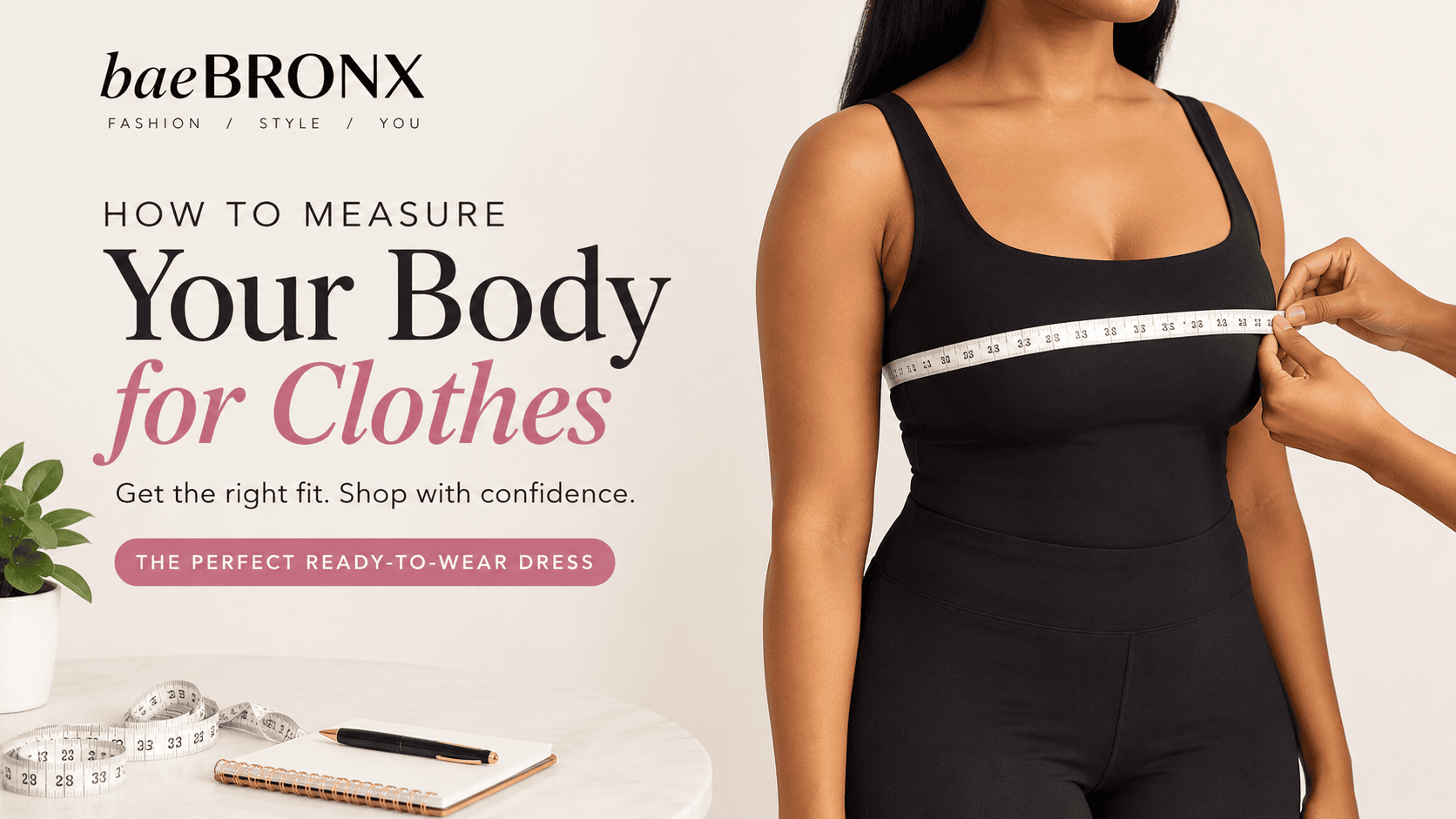

Have you ever ordered a dress online because you normally wear a certain size, only to find that it fits completely differently when it arrives? You’re not alone. Knowing how to measure your body for clothes can make shopping for ready-to-wear fashion much easier, especially when buying online. Your actual measurements give you a better idea of what size to choose, helping you find pieces that fit comfortably instead of relying only on a size 12, 14, XL, or XXL.
This is why knowing how to measure your body for clothes can make shopping for ready-to-wear fashion much easier. Your actual measurements give you a better idea of what size to choose, especially when shopping online or buying from different brands.
Clothing sizes can vary depending on the brand, fabric, design, and fit of a garment. A size 14 in one brand may not fit exactly like a size 14 somewhere else.
The good news is that taking your measurements at home is simple. All you need is a soft measuring tape and a few minutes. Let’s look at the key measurements you need and how to take them correctly.
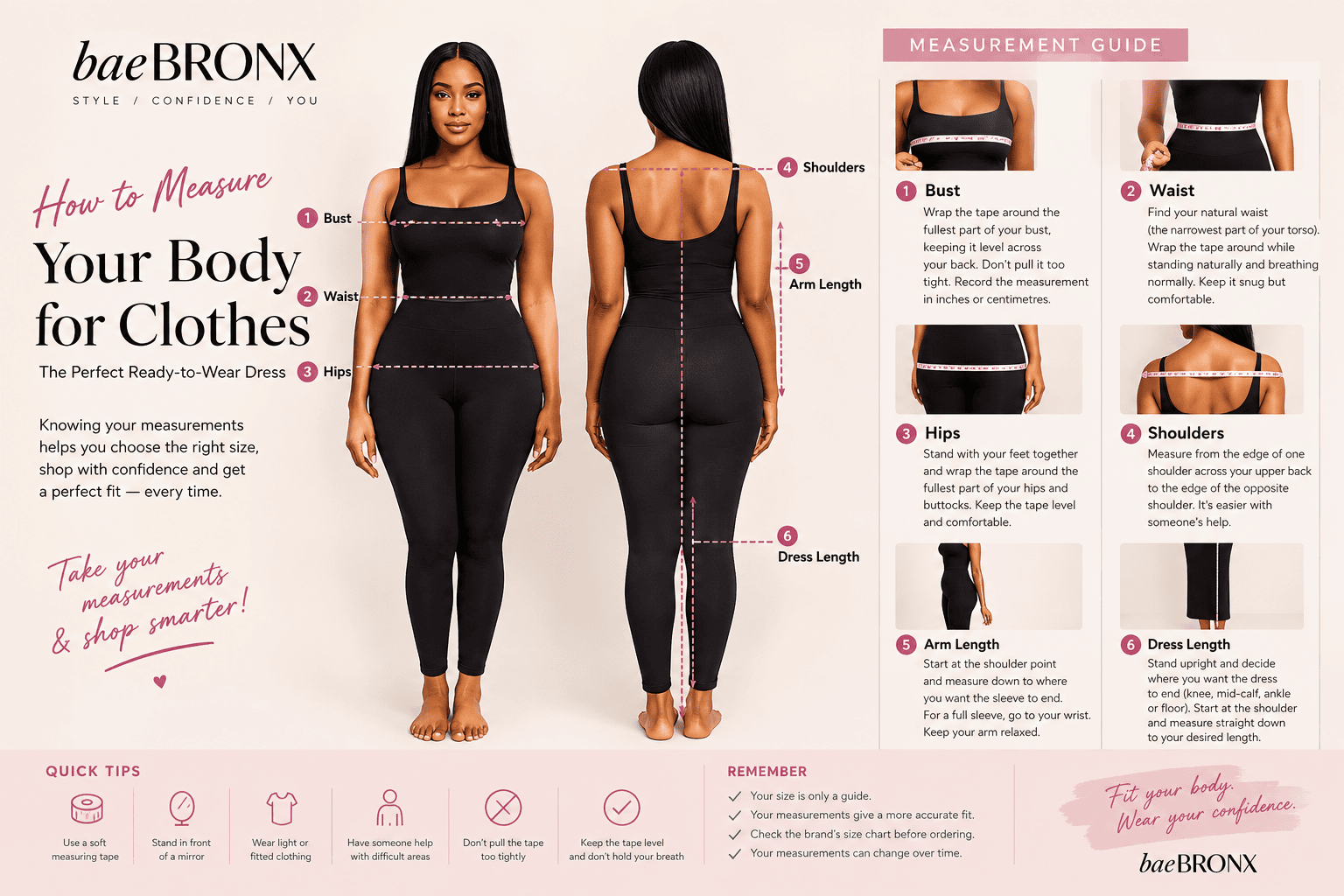
Your actual body measurements provide more useful information when choosing ready-to-wear clothing. Learning how to measure your body for clothes can also help you make better choices when comparing different sizes.
Before measuring, get:
Stand naturally while measuring. Don’t suck in your stomach or pull the tape tightly.
Wrap the measuring tape around the fullest part of your bust, keeping the tape level across your back.
Keep the tape comfortably against your body without pulling it tight. Record the measurement in inches or centimetres.
Avoid: Measuring underneath your bust or pulling the tape so tightly that it presses into your skin.
Find your natural waist, usually the narrowest part of your torso.
Wrap the tape around your waist while standing naturally and breathing normally. Keep the tape snug but comfortable.
Avoid: Holding your breath or sucking in your stomach. You want an accurate measurement of your natural body.
Stand with your feet together and wrap the measuring tape around the fullest part of your hips and buttocks.
Check in the mirror to make sure the tape is level all the way around.
Tip: Don’t squeeze the tape against your body. Let it sit comfortably.
Measure from the edge of one shoulder across your upper back to the edge of the opposite shoulder.
This measurement can be difficult to take alone, so having someone help you can make it more accurate.
Start at the shoulder point and measure down along your arm to where you want the sleeve to end.
For a full-length sleeve, measure down to your wrist.
Keep your arm relaxed rather than stretching it out unnaturally.
Stand upright and decide where you want the dress to end—such as the knee, mid-calf, ankle, or floor.
Start the tape at the point where the dress will begin, usually around the shoulder, and measure straight down to your desired length.
Having someone help you with this measurement can prevent the tape from becoming uneven.
One of the most common mistakes when learning how to measure your body for clothes is pulling the tape too tightly.
The tape should be snug, but not tight. It should touch your body without digging into your skin.
Don’t change your posture, hold your breath, or try to make your measurements smaller. Accurate measurements help you choose clothes that fit comfortably.
Keep these simple rules in mind:
Remember, your measurements can change over time, so it’s useful to check them again before placing a new order.
For plus-size women, knowing how to measure your body for clothes accurately can make online shopping much easier.
Two women can wear the same size but have completely different body proportions. One may have a fuller bust, while another may carry more fullness around her hips or have a longer torso.
That’s completely normal.
Instead of trying to make your body fit a particular size, use your measurements to find clothing that works with your proportions.
When shopping online, pay particular attention to your bust, waist, and hip measurements, as well as the dress length. Also consider whether the fabric has stretch, since this can affect how the garment fits.
Before ordering your next ready-to-wear outfit, keep these measurements saved:
Save them on your phone so they’re easy to reference whenever you’re shopping.
Knowing how to measure your body for clothes isn’t about trying to change your body or fit into a particular number. It’s about understanding your body so you can make more confident fashion choices.
At baeBRONX, we believe fashion should fit you—not the other way around. Your measurements are simply a tool to help you find pieces that feel comfortable, look beautiful, and work with your unique shape.
So before your next online fashion purchase, grab your measuring tape and get to know your measurements.
The goal isn’t to force your body into a size. The goal is to find clothes that fit your body.


